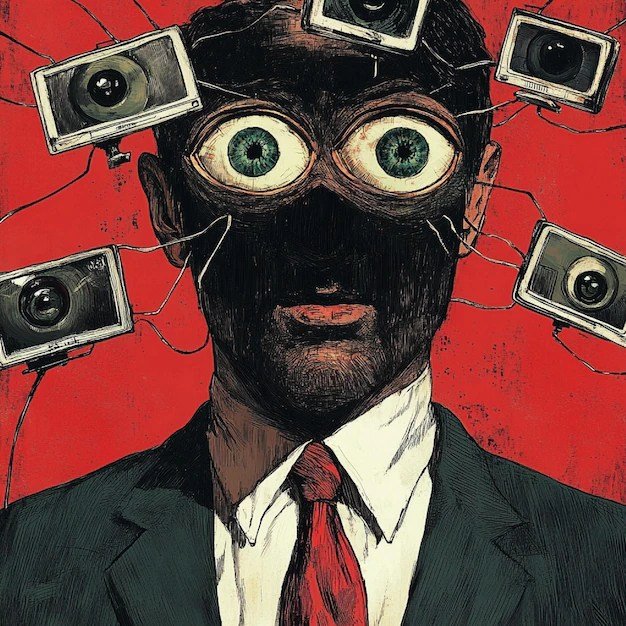
The digital battlefield is shifting, and the new frontline isn't always visible. For journalists, the urgent challenge of Detecting & Verifying AI-Generated Political Content has quickly become one of the most critical—and frankly, toughest—tasks on deadline. You're not just fighting misinformation; you're often racing against an adversary that can create convincing fakes in minutes, far outpacing traditional fact-checking methods.
This isn't about definitive "it's AI!" or "it's real!" anymore. That black-and-white certainty is largely a relic of the past. Your goal has pivoted: to rapidly assess the probability of AI involvement and then apply informed editorial judgment. This guide arms you with a comprehensive framework—seven advanced categories of detection—designed for speed, accuracy, and depth when every second counts.
At a Glance: Key Takeaways for the Frontline Journalist
- Old Tricks Fail: Previous AI detection methods (like weird hands) are rapidly obsolete; don't rely on them.
- Probability, Not Certainty: Shift your mindset to assessing the likelihood of AI generation.
- Speed is Paramount: Learn 30-second and 5-minute verification techniques.
- Seven Detection Pillars: Leverage a multi-faceted approach across anatomical, physical, technical, and behavioral clues.
- AI vs. AI: Utilize specialized AI detection tools to counter synthetic content.
- Trust Your Gut (Then Verify): Your intuition is a powerful first alarm, but it needs systematic backup.
- Context is King: Always scrutinize content against real-world logic, timing, and behavior.
Why the Game Has Changed: Outpacing the Fact-Checkers
Remember when poorly drawn hands or garbled text were dead giveaways for AI-generated images? Those days are largely behind us. Modern AI models like Midjourney V6 and DALL-E 3 have advanced at a breathtaking pace, producing visuals so sophisticated that they frequently fool the untrained eye. This rapid evolution creates a dangerous risk: relying on outdated detection methods can give you false confidence, leading to costly mistakes in reporting.
The problem isn't just about images, either. Deepfake audio can be generated for as little as $1 in under 20 minutes, making high-quality synthetic speech dangerously accessible. This puts journalists in an unprecedented position, requiring a new toolkit and a flexible, iterative approach to content verification. Tools like the "Image Whisperer" are emerging to help, using parallel large language model analysis and Google Vision to find subtle AI artifacts—or, crucially, to honestly report when it can't make a determination. That transparency is vital.
Now, let's dive into the seven critical categories that form your new defense.
1. Anatomical and Object Failures: When "Perfect" Becomes the Tell
Core Idea: Modern AI often strives for an uncanny perfection that simply isn't found in real photography. It struggles with the subtle, organic imperfections that define authenticity—things like natural skin texture, minor facial asymmetries, or realistic fabric drape. This pursuit of an idealized image can be its undoing.
30-Second Red Flag (Quick Scan): Look for magazine-quality aesthetics in contexts where they're wildly inappropriate. Think flawless makeup on a protest leader covered in dust, perfectly coiffed hair on a disaster victim, or clothes that look pristine and wrinkle-free in a chaotic scene. If it looks too good to be true, it often is.
5-Minute Technical Verification (Deeper Dive):
- Zoom to 100%: Focus on faces. Do you see natural skin texture, pores, and minor, realistic asymmetries that add character? Or does the skin look unnaturally smooth, almost airbrushed?
- Clothing & Fabric: Examine how clothes hang and wrinkle. Do they follow natural physics, or do they look "painted on" or unnaturally stiff? Look for realistic fabric textures.
- Hair Analysis: Can you discern individual strands, or does the hair appear like a solid, painted mass?
- Teeth Check: Are the teeth uniformly perfect, like a Hollywood smile, or do they show natural variations and minor imperfections (like slight misalignments or color variations)?
Deep Investigation (When Time Allows): - Comparative Analysis: If possible, compare the suspect image to other verified photos of the same individual or objects from similar real-world contexts. Note discrepancies in subtle features or textures.
- Technical Magnification & Pixel Patterns: Use advanced image editors to zoom in further. Digital forensics experts can examine pixel-level patterns for anomalies that betray AI generation.
2. Geometric Physics Violations: When AI Ignores Natural Laws
Core Idea: AI assembles images much like a sophisticated collage, drawing from vast datasets. However, it often lacks a true understanding of fundamental geometric and physical rules that govern light, perspective, and shadows in our 3D world. This can lead to subtle yet glaring inconsistencies.
30-Second Red Flag (Quick Scan): For images containing architecture or clear lines, quickly trace parallel lines (e.g., train tracks, building edges) in your mind. Do they converge to a single, logical vanishing point, as they would in real life? If they seem to diverge or converge unnaturally, it's a major red flag.
5-Minute Technical Verification (Deeper Dive):
- Perspective Test: Pick a prominent architectural feature like a building. Draw imaginary extended lines along its rooflines, window rows, or base. In a real photo, all parallel lines on that single structure should converge to one vanishing point on the horizon. If you find multiple vanishing points for a single, unified structure, it signals an AI assembly error.
- Shadow Analysis: Identify the primary light source in the image (e.g., the sun, a strong lamp). Now, examine all prominent shadows. Do they consistently point away from that single light source? Conflicting shadow directions—some pointing one way, others another—are a strong indicator of a physics violation.
Deep Investigation (When Time Allows): - Reflective Surfaces: For scenes with water, glass, or other reflective surfaces, lines connecting an object to its reflection should meet the surface at right angles. Additionally, the perspective of the reflection should converge to the same vanishing point as the object itself. Any deviation here points to a significant AI flaw.
3. Technical Fingerprints & Pixel Analysis: The Mathematical DNA
Core Idea: Every image file, whether from a camera or an AI, carries hidden mathematical signatures in its compression, pixel arrangement, and metadata. While AI is getting better at mimicking these, specialized tools can still detect unique patterns that reveal synthetic origins.
30-Second Red Flag (Quick Scan): Immediately leverage an Image Verification Assistant. Tools like TrueMedia.org can provide a "Forgery Probability" score. If this score is 70% or higher, it warrants serious further investigation. Don't take the score as gospel, but use it as a powerful initial filter.
5-Minute Technical Verification (Deeper Dive):
- Pixel-Level Scrutiny: Zoom in to 100% (or even 200%) on various parts of the image. Look for unnaturally smooth areas lacking grain or noise, or conversely, mathematical perfection in textures that feels sterile rather than organic. AI sometimes generates perfectly repetitive patterns that aren't found in natural randomness.
- Specialized AI Detection Tools: Upload the image to reputable AI detection platforms, such as TrueMedia.org, for a deeper analysis of its AI probability. These tools are constantly updated to detect new AI artifacts.
- Metadata Check: Examine the image file's metadata (right-click > Properties/Get Info > Details/More Info). Look for "software used" fields. Inconsistencies like a creation timestamp that doesn't align with the image's purported origin, or metadata suggesting a generic image editor when the content claims to be from a specific camera, can be telling.
Deep Investigation (When Time Allows): - Noise Analysis & Frequency Domain Visualization: Digital forensics experts can use advanced tools to perform noise analysis and frequency domain visualization. AI-generated images often exhibit distinct mathematical patterns or lack the natural noise distribution of real camera sensors. This is highly technical but extremely effective.
4. Voice & Audio Artifacts: When Synthetic Speech Betrays Itself
Core Idea: Voice cloning and deepfake audio, while increasingly accurate, still leave detectable traces. These can manifest in subtle speech patterns, emotional authenticity, or acoustic characteristics that a human ear (or a specialized AI) can pick up. Remember, creating deepfake audio can be incredibly cheap and fast.
Speech Pattern Red Flags: Listen carefully for:
- Unnatural Pacing: Is the speech too fast, too slow, or does it lack the natural pauses and cadences of human conversation?
- Robotic Inflection: Does the tone sound flat, overly uniform, or does it lack the subtle emotional shifts typical of human speech?
- Flawless Pronunciation: Paradoxically, too perfect pronunciation can be a giveaway, especially if the speaker typically has an accent or regional dialect that seems absent.
- Missing Environmental Background Noise: Genuine audio recordings often have subtle ambient sounds. A suspiciously clean, sterile audio track with no discernible background noise (unless recorded in a professional studio) is a red flag.
- Linguistic Logic Failures: AI can sometimes make subtle grammatical or logical errors that a native speaker wouldn't, such as incorrect currency placement ("pounds 35,000" instead of "35,000 pounds").
30-Second Red Flag (Quick Scan): For real-time audio analysis, consider using browser plugins like the Hiya Deepfake Voice Detector (Chrome plugin). It can analyze voices in videos and audio playing directly in your browser, offering an immediate probability assessment.
5-Minute Technical Verification (Deeper Dive): - Naturalness Audit: Listen repeatedly to the audio. Does the pacing feel natural? Is the pronunciation consistent with the alleged speaker?
- Contextual Logic: Does the content of the statement logically fit the person? Could they reasonably have made this statement in this context?
- Emotional Authenticity: Does the speaker's emotional tone align with the message and the purported situation? A mismatch here is a strong indicator.
- Challenge Questions: If possible and relevant, consider if the audio contains information that only the real person would know, or if it avoids specific, nuanced topics.
Deep Investigation (When Time Allows): - Audio Transcription & AI Analysis: Transcribe the audio using an AI tool like Notta.ai. Then, use a large language model (e.g., Claude, GPT-4) to analyze verified audio transcripts of the real person for their unique speech patterns, common phrases, grammar, and tone. Compare these against the suspect audio transcript for anomalies. This cross-referencing can reveal subtle linguistic fingerprints of AI generation. If you're looking for specific examples of this, research into potential Trump AI video generator uses has shown how AI can mimic, but also subtly alter, speech patterns.
- Spectral Analysis: Advanced audio forensics involves spectral analysis, which visualizes sound frequencies. AI-generated voices often have different spectral patterns and lack the natural complexity of human speech, which can be detected by experts.
5. Temporal and Contextual Logic: When AI Misses the Big Picture
Core Idea: AI generates content based on learned visual patterns without true understanding of real-world context, temporal flow, or situational appropriateness. This means it can produce content that looks convincing in isolation but completely falls apart under broader scrutiny.
30-Second Red Flag (Quick Scan): Look for immediate mismatches. Is the weather or season in the image inconsistent with the claimed date? Is there anachronistic technology present (e.g., an old phone in a modern protest, or vice-versa)? Are there geographical inconsistencies (e.g., landmarks in the wrong city)? Does the source's credibility align with the sophistication of the content?
5-Minute Technical Verification (Deeper Dive):
- Cross-Reference Environmental Data: Check visible weather conditions (snow, sun, rain) against historical weather data for the claimed date and location. Verify the type of flora/fauna against the season.
- Geographic & Cultural Consistency: Use satellite imagery, street view tools (like Google Street View), and maps to verify architectural landmarks, street layouts, and general environment. Assess if cultural elements (clothing styles, social behaviors) match the claimed location and context.
- Timeline Probability: Assess the probability of claimed events occurring within the stated timeline. Are there significant gaps or impossibilities?
Deep Investigation (When Time Allows): - Detailed Timeline Reconstruction: Build a comprehensive timeline of all events related to the content. Cross-reference every detail with independent sources.
- Expert Consultation: For complex scenarios, consult experts—botanists for plant verification, meteorologists for weather patterns, cultural specialists for behavioral or attire authenticity.
- Source Chain Analysis: Investigate the chain of custody for the content. Who first shared it? When? Has it been modified along the way?
6. Behavioral Pattern Recognition: When AI Gets Humans Wrong
Core Idea: AI often struggles with the authentic nuances of human behavior, social dynamics, and natural interaction patterns. This can lead to inconsistencies in how individuals or groups act, particularly in crowd scenes or complex social settings.
30-Second Red Flag (Quick Scan): Observe crowd dynamics. Do you see unnatural uniformity (e.g., everyone in a crowd looking roughly the same age, wearing similar clothes, or having identical expressions)? Is everyone looking in precisely the same direction, or is the emotional expression of individuals disconnected from the overall mood of the event?
5-Minute Technical Verification (Deeper Dive):
- Demographic Diversity Audit: Compare the supposed demographic diversity of a crowd or group to what would be typical for that event. Does it appear artificially uniform, lacking the natural variation of age, ethnicity, or appearance?
- Social Interaction Mapping: Observe how people are interacting. Are they engaging naturally, respecting personal space, or are they positioned awkwardly, almost like mannequins?
- Environmental Reactions: How do individuals react to environmental factors like weather, noise, or a sudden event? Do their reactions seem genuine and varied, or strangely muted/uniform?
- Cultural Behavior Check: Cross-check behaviors (e.g., gestures, personal space, group dynamics) against the cultural norms of the claimed location.
Deep Investigation (When Time Allows): - Psychological and Cultural Expertise: Consult experts in crowd psychology, cultural authenticity, and micro-expression analysis. They can identify subtle cues that AI consistently misses.
- Comparative Analysis of Similar Events: Research verified footage or images of similar real-world events. How do genuine crowds or individuals behave in those contexts? Compare against the suspect content.
7. Intuitive Pattern Recognition: The Ancient Detection System
Core Idea: As humans, our brains possess an incredibly evolved pattern recognition ability. That "gut feeling" that "something is off" often serves as the fastest initial detector of AI-generated content, especially when it falls into the "uncanny valley"—looking almost real, but just wrong enough to trigger unease.
30-Second Red Flag (Quick Scan): Trust your first impression. If content feels subtly "produced," manufactured, or triggers a sense of unease or unnaturalness, don't dismiss it. Look for a "production-cost paradox": amateur source, Hollywood-quality content. Or "timing convenience": chaotic, complex events perfectly documented by an improbable source.
5-Minute Technical Verification (Deeper Dive):
- Pinpoint the Unease: Don't just stop at "it feels off." Try to identify specific elements that triggered your intuition. Was it a strange texture, an awkward pose, an unnatural light, or a peculiar expression?
- Contextual & Source Credibility Check: Does the overall context or the source's credibility align with the polished nature of the content? A low-quality source suddenly producing high-quality, perfectly framed images is a massive red flag.
- Technical Inconsistencies: Use your intuition to guide further technical checks. Did that strange light make you look closer at shadows? Did an uncanny facial expression lead you to zoom in on skin texture?
Deep Investigation (When Time Allows): - Catalog "Off" Elements: Systematically list every single element that feels unnatural or "off." For each, research its violation of natural expectations (e.g., "Why do I feel this crowd isn't real? -> People are too similar, too perfectly posed").
- Resource Analysis: Investigate the actual resources and capabilities needed to produce such content versus the claimed source's capabilities. A powerful, sophisticated deepfake requires significant computing power and expertise.
- Emotional Manipulation Analysis: Consider if the content seems designed for emotional manipulation rather than organic information sharing. AI-generated political content often targets emotional triggers with tailored narratives.
Mastering the New Reality: Your Ongoing Toolkit
Detecting and verifying AI-generated political content is a dynamic and ongoing challenge. The techniques outlined here are your primary defense, but they are most effective when combined with a proactive mindset:
- Stay Updated: AI models are constantly evolving. Follow experts, subscribe to newsletters, and regularly review new detection tools and techniques. What works today might be obsolete tomorrow.
- Embrace Probabilistic Thinking: Let go of the need for 100% certainty. Instead, develop the ability to articulate the likelihood of AI generation, along with the specific evidence supporting your assessment. This empowers you to make informed editorial judgments under pressure.
- Leverage AI to Fight AI: Don't shy away from using AI detection tools. They are becoming indispensable in this fight to preserve shared reality.
- Collaborate and Share: The journalism community is strongest when it shares findings and best practices. Collaborate with colleagues, verify each other's work, and contribute to the collective knowledge base.
Your role as a journalist has never been more vital. By sharpening your detection skills and adopting these advanced strategies, you can continue to be a trusted guardian of truth in an increasingly synthetic world.