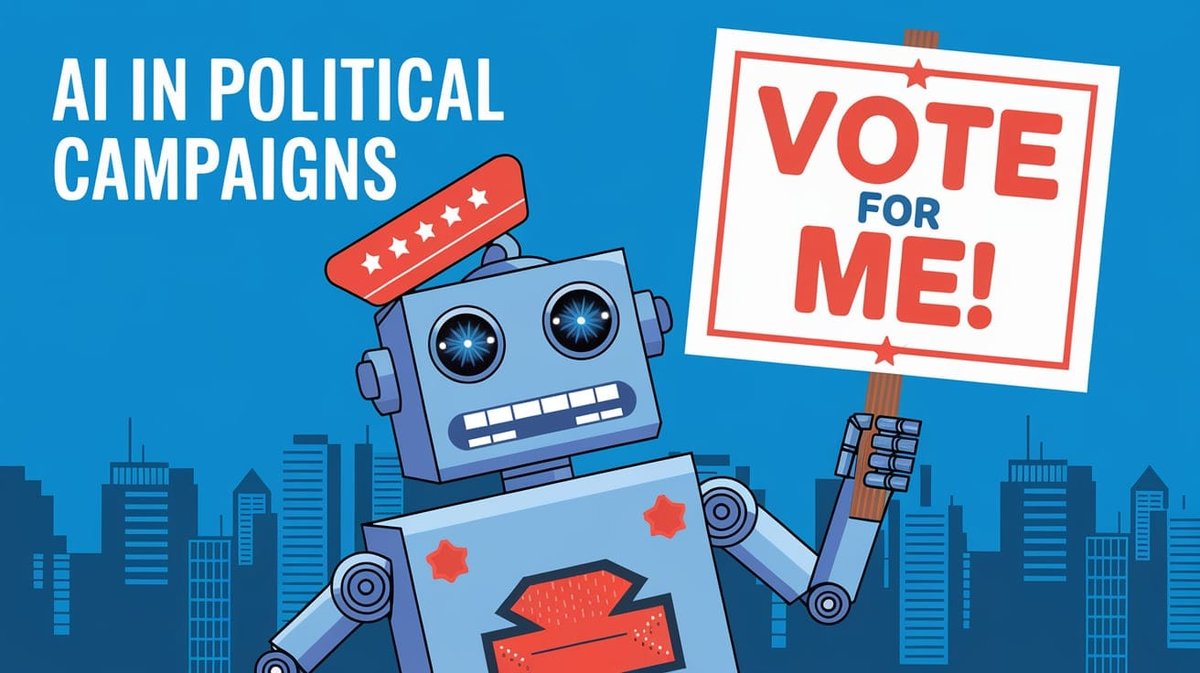
The landscape of political communication is undergoing a seismic shift, and at its epicenter is the role of AI video in political campaigns and discourse. This isn't just about tweaking an ad; it's about fundamentally reshaping how candidates connect with voters, delivering messages that are hyper-personalized, culturally resonant, and remarkably efficient. As AI video technology rapidly evolves, it presents both an unprecedented opportunity to engage and inform, and a potent risk of manipulation and the erosion of public trust.
At a Glance: AI Video's Impact on Politics
- Video's Primacy: Humans are hardwired for visual and auditory connection; video simplifies complex policies and drives emotional engagement.
- Game-Changing Benefits: AI enables mass personalization, instant language translation, drastic cost reduction, rapid response, and enhanced accessibility for campaigns.
- Serious Risks: The technology's power also fuels concerns about deepfakes, manipulative microtargeting, loss of accountability, dehumanization of candidates, and accelerated misinformation spread.
- Ethical Imperatives: Transparency, robust regulation, and widespread voter education are crucial to safeguarding democratic processes.
- Platform Innovation: Tools like ReelMind.ai demonstrate the advanced capabilities emerging, offering sophisticated creation and management for AI-powered video.
- Responsible Engagement: Strategic planning, tool selection, testing, and continuous optimization are key for campaigns to leverage AI video ethically and effectively.
The Enduring Power of Video in Politics
Before AI entered the chat, video was already an undisputed champion in political campaigning. Why? Because we're fundamentally emotional beings, and few mediums connect with us as deeply as a face, a voice, and a compelling narrative. Video effortlessly simplifies intricate policies into digestible stories, making abstract concepts concrete. It's why platforms like YouTube, TikTok, and Facebook, all heavily reliant on video, have become dominant arenas for political conversation. A revealing Pew Research Center study showed that nearly two-thirds of U.S. adults consume political content through online video, underscoring its persuasive reach and undeniable influence.
AI hasn't just enhanced this; it's supercharged it, taking video's inherent power and amplifying it to an entirely new dimension.
The Bright Side: How AI Video Amplifies Campaigns
Imagine a campaign no longer limited by production budgets or language barriers, capable of speaking directly to every voter in a way that feels incredibly personal. This is the promise of AI video.
Personalization at Scale
One of AI video's most revolutionary capabilities is its ability to deliver mass personalization. Instead of a single, generic campaign ad, AI allows campaigns to craft distinct, tailored video messages for specific demographic groups. Think about it: veterans could receive a message highlighting a candidate's commitment to their benefits, single parents might see a video focused on childcare policies, and college students could hear about student loan reform, all delivered by the same candidate, yet subtly adjusted for maximum relevance. This level of microtargeting, previously unimaginable, creates an incredibly powerful and intimate connection.
Breaking Language Barriers
The United States is a mosaic of cultures and languages. Reaching immigrant communities with authentic messaging has historically been a labor-intensive and expensive endeavor. AI video demolishes this barrier. Candidates can now have their speeches instantly translated and lip-synced into multiple languages, maintaining their original voice and mannerisms. This isn't just about subtitles; it’s about a candidate appearing to speak directly in Spanish, Mandarin, or Vietnamese, fostering a deeper, more inclusive dialogue with diverse electorates.
Democratizing Campaigns: Cost & Speed Efficiency
Traditional video production is notoriously expensive and time-consuming, often a bottleneck for smaller campaigns. AI video drastically reduces these barriers. With AI, generating high-quality video content can be done in hours, not weeks, and at a fraction of the cost. This efficiency allows smaller campaigns to compete on a more level playing field with well-funded incumbents, fostering a more democratic campaign environment. Imagine a breaking news event where a candidate needs to issue a video statement within hours—AI makes this a reality, enabling rapid, agile responses that keep campaigns relevant and responsive.
Boosting Inclusivity
Beyond language translation, AI video inherently enhances accessibility. By seamlessly generating captions and offering translated versions, it significantly improves reach for voters with hearing impairments or those who prefer to consume content in their native tongue. This commitment to inclusivity ensures that more voices can engage with political discourse, making the democratic process more representative.
The Dark Side: Navigating the Perils of AI Video
For every promise, AI video carries a corresponding peril. Its power to persuade can easily be twisted into a tool for manipulation, challenging the very foundations of trust and truth in our democratic systems.
Eroding Trust & Amplifying Manipulation
The ability to create perfectly tailored, emotionally resonant appeals for millions of micro-audiences, while beneficial for engagement, also raises serious manipulation concerns. If every voter receives a subtly different, customized message, how do we ensure a shared public discourse? A report from the Brookings Institution has explicitly warned that AI video, particularly deepfakes, could severely undermine voter trust and destabilize democratic processes. When voters can no longer distinguish between genuine statements and AI-generated fabrications, the bedrock of informed decision-making crumbles.
The Deepfake Dilemma: Viral Misinformation
Perhaps the most potent threat comes from deepfakes. A single, expertly crafted fake video of a candidate making a controversial or incendiary statement can go viral worldwide in minutes. By the time fact-checkers can verify its authenticity, the damage—in terms of reputation, public opinion, and even real-world consequences—may be irreparable. The speed and realism of deepfakes make them uniquely dangerous weapons in the arsenal of misinformation. The possibility to generate Trump AI videos or other prominent figures with fabricated speeches highlights this critical vulnerability.
Over-Personalization and Accountability Gaps
If a candidate makes different, tailored promises to different voter segments, who holds them accountable? The problem of over-personalization is that it fragments the public sphere. What one demographic hears might contradict what another hears, making it nearly impossible for the public to collectively assess a politician's true platform or hold them to a consistent set of commitments. This lack of transparency can lead to a less informed electorate and a more opaque political process.
The Dehumanization Factor
As AI video advances, it might allow campaigns to replace genuine candidate appearances with AI avatars or highly edited, synthesized versions. While efficient, this risks dehumanizing the political process. Voters connect with human leaders, their authentic emotions, and their genuine presence. An AI-generated surrogate, however realistic, could create a psychological distance between the electorate and their representatives, fostering a sense of artificiality and detachment.
Accelerating Misinformation's Spread
Studies, like those from the MIT Sloan School of Management, have long shown that false information spreads faster online than factual news. AI video compounds this risk significantly. The visual and auditory realism of AI-generated content lends it an undeserved air of authenticity, making it easier for misinformation to deceive and spread like wildfire, further polluting the public discourse with fabricated narratives.
Ethical Foundations: Building Trust in an AI-Driven Landscape
The power of AI video demands an equally powerful commitment to ethical practices. Without guardrails, the technology's benefits could be overshadowed by its destructive potential.
The Imperative of Transparency
The first and most crucial step is transparency. Campaigns must disclose when video content has been created or significantly altered with the assistance of AI. This isn't just good practice; it's vital for maintaining voter trust. Clear disclaimers, watermarks, or embedded metadata can help distinguish AI-generated content from genuine human-created material, allowing viewers to evaluate information with appropriate skepticism.
The Need for Smart Regulation
Just as there are rules for disclosing campaign finance sources or the origins of political ads, similar regulations are desperately needed for AI-generated political content. Industry leaders, government bodies, and civil society must collaborate to establish clear guidelines, standards, and enforcement mechanisms. These regulations should aim to curb malicious uses while still allowing for the innovative and beneficial applications of AI video in political communication. Striking this balance will be critical for fostering a healthy democratic environment.
Empowering the Electorate: Voter Education
Ultimately, the best defense against the misuse of AI video lies in an informed citizenry. Voter education is paramount. Citizens must learn to critically evaluate the content they consume online by asking fundamental questions: "Who produced this video?" "Is there corroborating evidence beyond what I see here?" "Could this content have been manipulated?" Media literacy, especially concerning AI-generated content, is no longer a niche skill but a fundamental civic duty in the age of digital information. It is the cornerstone for preserving the integrity of our elections and public discourse.
AI Video in Action: A Look at Platforms Like ReelMind.ai
To understand the practical implications of AI video, it's helpful to examine the capabilities of platforms currently driving this revolution. ReelMind.ai, for example, embodies a comprehensive approach, leveraging over 101 advanced AI models (such as Runway Gen-4, OpenAI Sora, Flux Pro) to democratize video content creation.
Precision and Consistency Across Narratives
Campaigns often need to produce a large volume of video while maintaining consistent branding, character appearance, and environmental aesthetics. ReelMind.ai addresses this with features like multi-image fusion and style control. This ensures that whether a candidate is speaking in a different setting or appearing in multiple ads, their look, the background, and the overall style remain coherent and on-brand, reinforcing recognition and professionalism.
"Nolan": Your AI Agent Director
One of the platform's standout innovations is "Nolan," billed as the world's first AI Agent Director. This intelligent assistant offers expert recommendations on narrative structure, scene composition, and cinematography. For political campaigns, this means even small teams without professional video producers can create high-quality, impactful content. Nolan guides users through the creative process, ensuring that the final video is not just technically sound but also strategically effective in its messaging.
Backend Power: Scalability & Efficiency
Underpinning these creative tools is a robust technological infrastructure. ReelMind.ai's backend, built with NestJS, TypeScript, PostgreSQL (via Supabase), and Cloudflare, is designed to handle computationally intensive tasks. This architecture ensures efficient GPU resource management and the ability to scale operations rapidly, which is crucial for campaigns that need to generate vast amounts of video content quickly and reliably, from local races to national campaigns.
A New Model for Monetization and Community
Beyond creation, ReelMind.ai introduces a novel system for monetization and community engagement through a blockchain-based credit system. Users can train and publish their own AI models, earning credits that can then be used within the platform or converted into income. This fosters a vibrant ecosystem of innovation, encouraging developers and creators to contribute new capabilities and models, further democratizing access to cutting-edge AI video tools.
Your Playbook for Engaging with AI Video in Politics
For any campaign or organization looking to leverage AI video, a strategic and ethical approach is essential. Here’s a practical guide to navigate this new terrain.
Step 1: Assess and Strategize
Before diving into tool selection, clearly define your objectives. What specific message do you want to convey? Who is your target audience? What impact do you hope to achieve? Research existing AI video platforms and their capabilities, considering ethical implications from the outset. Your strategy should prioritize genuine engagement over mere novelty.
Step 2: Choose Your Tools Wisely
Select an AI video platform that aligns with your campaign's goals and budget. Consider factors like ease of use, available AI models, personalization features, and support for multilingual content. Familiarize yourself with the platform's credit system or pricing model, and understand the specific features that will benefit your campaign the most, such as custom model training or advanced editing capabilities.
Step 3: Implement and Test
Begin by creating initial content using text-to-video or image-to-video features. Don't go live immediately. Test your AI-generated videos across different platforms and with various audience segments. Gather feedback on clarity, emotional impact, and perceived authenticity. This iterative process allows you to refine your content and ensure it resonates effectively and ethically with your target voters.
Step 4: Optimize and Scale Responsibly
Based on your testing and feedback, refine your AI video creations. Leverage advanced features like custom model training to enhance character consistency or stylistic elements. As you scale up your production, remain vigilant about ethical best practices: always disclose AI assistance, avoid deceptive content, and continually educate your team on the evolving landscape of AI ethics and regulation. The goal is to maximize impact while minimizing potential harm.
The Path Forward: Harnessing AI Video for a Stronger Democracy
AI video is not merely a technological fad; it's a fundamental shift in political communication. Its ability to personalize, translate, and accelerate content creation will make it an indispensable tool for campaigns of all sizes. The challenge, and indeed the imperative, is to harness this immense power responsibly. By prioritizing transparency, advocating for thoughtful regulation, and empowering voters with critical media literacy, we can ensure that AI video serves to enhance, rather than undermine, the democratic process. The future of political discourse will undoubtedly be shaped by AI video; it's up to us to guide its evolution towards a more informed, engaged, and ultimately, a more democratic future.